

Report Highlights Enduring Pillars of Addiction Science as Key to Continued Progress
Shining a light on integrated care to promote mastery and unlock human potential.
Even as substance-related deaths and overdoses remain near record highs, a new report by leading scientists, clinicians, and former federal officials warns that recent shifts in funding, staffing, and data systems have strained the nation’s long-built infrastructure for combating addiction. Yet the assessment, released by the Addiction Science Defense Network, frames the moment as a call to reinforce the very foundations that have driven decades of progress and to innovate more effectively with the resources at hand.
Titled “Addiction Science Under Siege: The 2025 Impact of Federal Actions on Research, Prevention, Treatment, and Recovery,” the report offers a detailed accounting of how the nation’s capacity to understand, prevent, and treat addiction has been tested. Prepared by an interdisciplinary working group that includes psychologists, neuroscientists, epidemiologists, economists, and physicians, it underscores a central truth: the infrastructure developed over the past half-century, with sustained bipartisan support in Congress and steady taxpayer investment, remains essential to turning the tide on a crisis that touches every community.
The report’s authors emphasize that protecting and strengthening five interlocking pillars of addiction science is a practical necessity that enables researchers, clinicians, and policymakers to do more, and to do it more efficiently, even in a period of tighter budgets.
A Strong and Stable National Research Infrastructure
First among them is a strong and stable national addiction research infrastructure. For 50 years, federal investments have built a network of laboratories, longitudinal studies, and clinical trials that have transformed how addiction is understood, shifting it from a moral failing to a chronic brain disorder amenable to treatment. That foundation has yielded medications like buprenorphine for opioid use disorder, behavioral therapies that cut relapse rates, and insights into how early prevention can reshape life trajectories. Maintaining it, the report argues, allows scientists to keep innovating: developing faster diagnostic tools, exploring the genetics of vulnerability, and testing digital interventions that reach people who might never walk into a clinic. Without steady support, the report notes, the pipeline of new discoveries slows precisely when the need for fresh solutions is greatest.
Continuity of Prevention, Treatment and Recovery Services
Equally vital is the continuity of prevention programs, treatment, and recovery services. Evidence-based initiatives such as school-based education that delays first use, community outreach that connects people to care, and long-term recovery support that helps individuals rebuild lives have demonstrably lowered overdose deaths and emergency-room visits in communities that have sustained them. The report highlights how these programs function as force multipliers: they not only save lives but also reduce the downstream costs of untreated addiction to hospitals, prisons, and social services. In an era when federal resources may be more constrained, the authors stress the importance of protecting core funding streams so that states and localities can keep proven programs running and adapt them to emerging threats, such as the rising presence of synthetic opioids or the lingering mental-health effects of the pandemic.
Preserving Access to Reliable Public Health Data
Preserving access to reliable public health data forms the third pillar. Timely, accurate information on overdose trends, treatment gaps, and demographic patterns has allowed public-health agencies to direct resources where they are needed most, whether that means surging naloxone distribution to rural counties or tailoring prevention messages to specific age groups. The report cautions that disruptions to data systems threaten that responsiveness. Yet it also frames the challenge as an opportunity: with clearer data flows, researchers and officials can move from reactive crisis management to proactive, precision public health.
Supporting a Highly Trained Addiction Workforce
The fourth pillar is the highly trained workforce dedicated to the field. From neuroscientists mapping reward circuits in the brain to counselors guiding patients through recovery, thousands of specialized professionals form the human infrastructure of addiction care. The report notes that recent staffing strains have made it harder to recruit and retain these experts, particularly in underserved areas. Supporting them through training pipelines, loan-repayment programs, and stable career paths is presented as both a moral and practical imperative. A robust workforce does not merely deliver services; it also mentors the next generation, conducts frontline research, and translates scientific findings into everyday clinical practice.
Evidence-Informed Policymaking for Families and Communities
Finally, the report calls for continued promotion of evidence-informed policymaking. Decisions grounded in rigorous data have produced measurable gains: expanded access to medication-assisted treatment, criminal-justice reforms that prioritize treatment over incarceration for nonviolent offenders, and public-awareness campaigns that reduce stigma and encourage help-seeking. The authors argue that sustaining this approach benefits families and communities nationwide by ensuring that scarce dollars are spent on programs with proven results.
The Addiction Science Defense Network, which represents psychologists, psychiatrists, nurses, social workers, and many others on the front lines, released the report to underscore a shared commitment across disciplines. Its members, many of whom have spent careers inside and outside government, describe the current moment as one of heightened stakes but also heightened possibility. Substance-related harms remain historically elevated, yet the scientific tools and clinical know-how developed over generations offer a clearer path than ever before.
The report does not prescribe specific legislative remedies. Instead, it urges lawmakers, agency leaders, and the public to recognize that the pillars of addiction science are interdependent. A stable research base feeds better prevention programs. Reliable data guides workforce deployment. Evidence-informed policy keeps all of it aligned with real-world needs. Protecting these elements, the authors write, is how the nation can continue to innovate by developing smarter interventions, reaching more people, and steadily reducing the toll of addiction even when resources are tighter than they once were.
In communities across the country, families still wait for loved ones to come home from treatment, and coroners still record the human cost of an unrelenting crisis. The message from the nation’s addiction-science community is measured and forward-looking: the foundations are sound. With thoughtful stewardship, they can carry the work of prevention, treatment, and recovery into a future in which fewer lives are lost and more are restored.
Catalyst Poll
Bridging the Gap Between the Business of Treatment and the Treatment Business: In the Field with Jamelia Hand
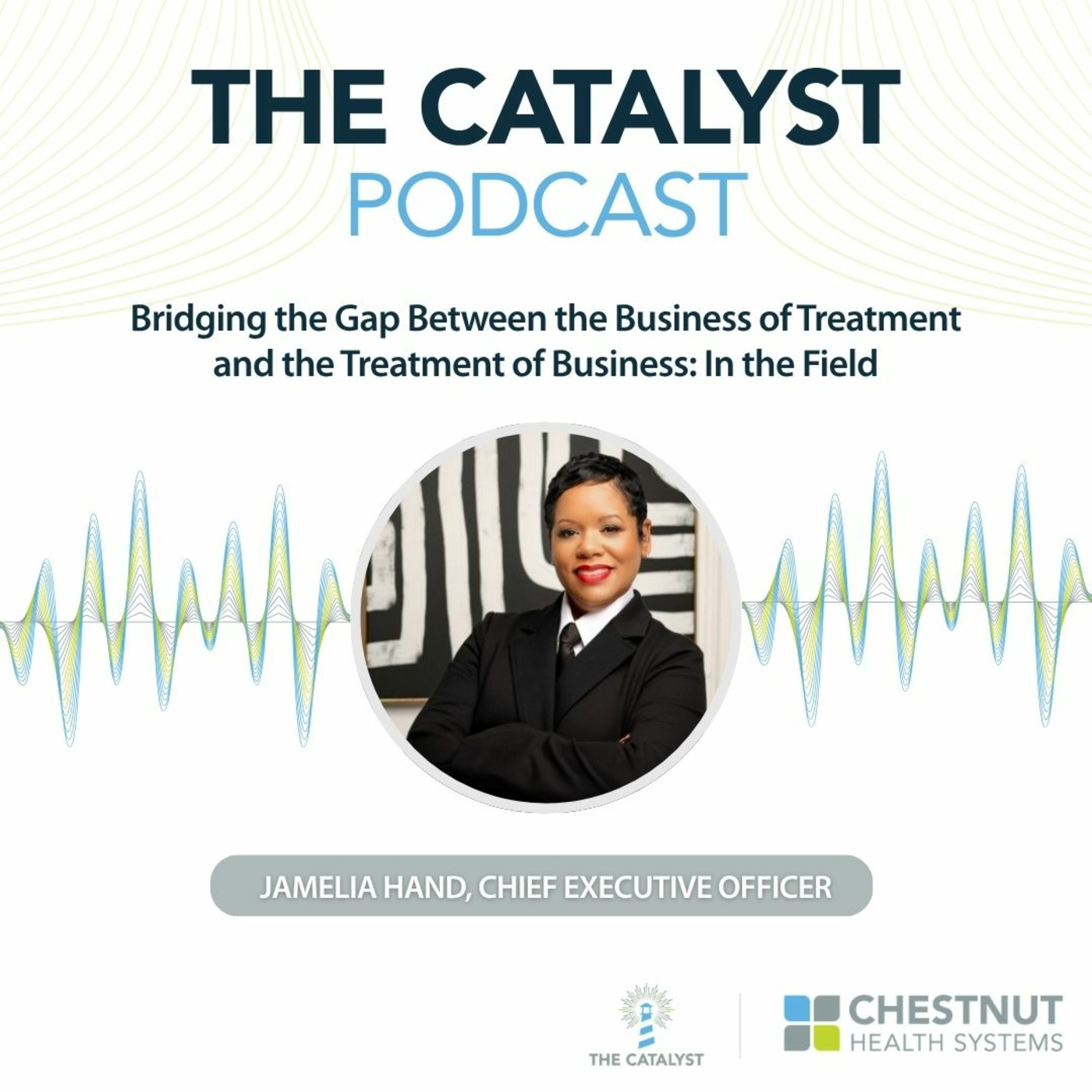
Jamelia Hand, CEO of Vantage Clinical Consulting, advises healthcare systems, corporate organizations, and advocacy groups in their efforts to reduce the national emergencies of opioid addiction and drug overdose via strategy consulting, training, technical assistance, and Program Development. Her areas of expertise encompass behavioral Health, digital …

Free, Online Toolkit for Partnering with Communities in Substance Use Research. Chestnut Health Systems has released the final chapters of its free, online Community-Based Participatory Research (CBPR) toolkit, created to help researchers build meaningful partnerships through Community Boards of people with lived experience with substance use. This resource is informed by years of collaboration with individuals from the HEAL Connections Lived Experience Panel, the JEAP Initiative Community Boards, the CHEARR Community Boards, and the PATH Community Board.

We scour all four corners of the Internet to bring you the week’s most insightful, relevant, and actionable articles, studies, and reports.
Peer Support Makes a Difference for Mental Health and Substance Use Disorder Patients. Stories from a recent patients’ rights conference highlight how peer specialists help navigate care gaps, incarceration cycles, and system distrust, with peer roles now recognized as medical providers since 2020. Source: Disability Rights California
What to know about NYC’s new $12 million peer addiction recovery investment
New York City is allocating $12 million from opioid lawsuit settlements to expand peer-led addiction recovery and harm reduction programs across all boroughs, supporting seven nonprofits with peer counseling, outreach, coaching, and workforce development. The initiative will train 500 additional peer workers over four years to leverage lived experience for better trust and relapse prevention, following a 28% drop in overdose deaths. Source: Epicenter NYC
New Bend recovery center expands support for young adults in recovery. A new Recovery Community Center in Bend, Oregon, opened to provide peer-led mentoring, activities, and support for young adults facing substance use and mental health challenges. Funded by nearly $2 million from the Oregon Health Authority’s Behavioral Health Resource Network program over four years, the center emphasizes community-based recovery. Source: Oregon Health Authority
New Report Highlights Independent Mental Health Practice, Access to Care, and Evolving Role of AI. A SimplePractice report shows independent clinicians delivered over 113 million mental health sessions in 2025, treating primarily anxiety, adjustment disorders, and depression, with strong rural access and quick appointment availability. AI adoption remains low and mostly administrative despite time-saving potential, while financial sustainability challenges persist for independent practices.
Source: Psychiatric Times
AI chatbots are becoming mental health tools before they are ready. Millions of people are using AI chatbots for mental health support like anxiety and loneliness, but new mpathic research shows leading models fail to detect subtle suicide risks, eating disorders, or misinformation, often offering harmful reassurance. The study introduces a benchmark for safer evaluation and stresses the need for clinician oversight. Source: Fortune
Americans are increasingly concerned about AI exacerbating mental health problems
YouGov surveys from early 2026 show 43% of Americans are very concerned about AI worsening mental health (up from 35% in 2025), with younger adults and women showing sharper increases. Most remain uncomfortable using AI as a therapist, though younger people are more open, and few have actually tried it for therapy.
Source: YouGov
College students face rising mental health issues. UnitedHealthcare’s survey of college students and young adults (18-28) found 69% reported a mental or behavioral health concern in the past year—the highest in four years—with anxiety, stress, depression, and ADD/ADHD most common. Cost and uncertainty about seeking help remain major barriers, though 31% have used AI tools for support. Source: Employee Benefit News
Fast Facts from the WHA Information Center: May is Mental Health Month
As part of Mental Health Month, Wisconsin Hospital Association data highlight that depression is the most common mental health diagnosis statewide (2022-2025), with 4.9 million annual U.S. emergency visits for mental disorders per CDC. Contributing factors include trauma, chronic conditions, substance use, and loneliness; females and younger age groups show higher visit rates. Source: Wisconsin Hospital Association (WHA)
Public Perceptions of Addiction and Recovery: A 20-Year Follow-Up to the Hart Benchmark (2004–2026). The May 2026 national survey update from Faces & Voices of Recovery tracks shifting public views on addiction as a treatable chronic condition versus moral failing, showing growing support for recovery services, peer support, and policy reforms, with strong indications that Americans are increasingly ready for expanded recovery infrastructure. Source: Faces & Voices of Recovery
About Chestnut Health Systems’ Lighthouse Institute
Chestnut Health Systems’™ Lighthouse Institute was established in 1986. Our mission is to help practitioners improve the quality of their services through research, training, and publishing. Serving health and human service organizations through offices in Chicago and Bloomington/Normal, Illinois, and Eugene, Oregon, Lighthouse Institute staff conduct applied research, program evaluation, training, and consultation.
Lighthouse Institute publishes books, monographs, curricula, and manuals on various issues of behavioral health, education, and program management. Institute staff have backgrounds and expertise in addictions, business, education, management information systems, psychology, public health, rehabilitation, research methods, statistics, and social work. For more, visit https://www.chestnut.org/lighthouse-institute/