

New Report Reveals the Influence of Twelve Step Meetings in Shaping Effective Substance Use Treatment
Shining a light on integrated care to promote mastery and unlock human potential.
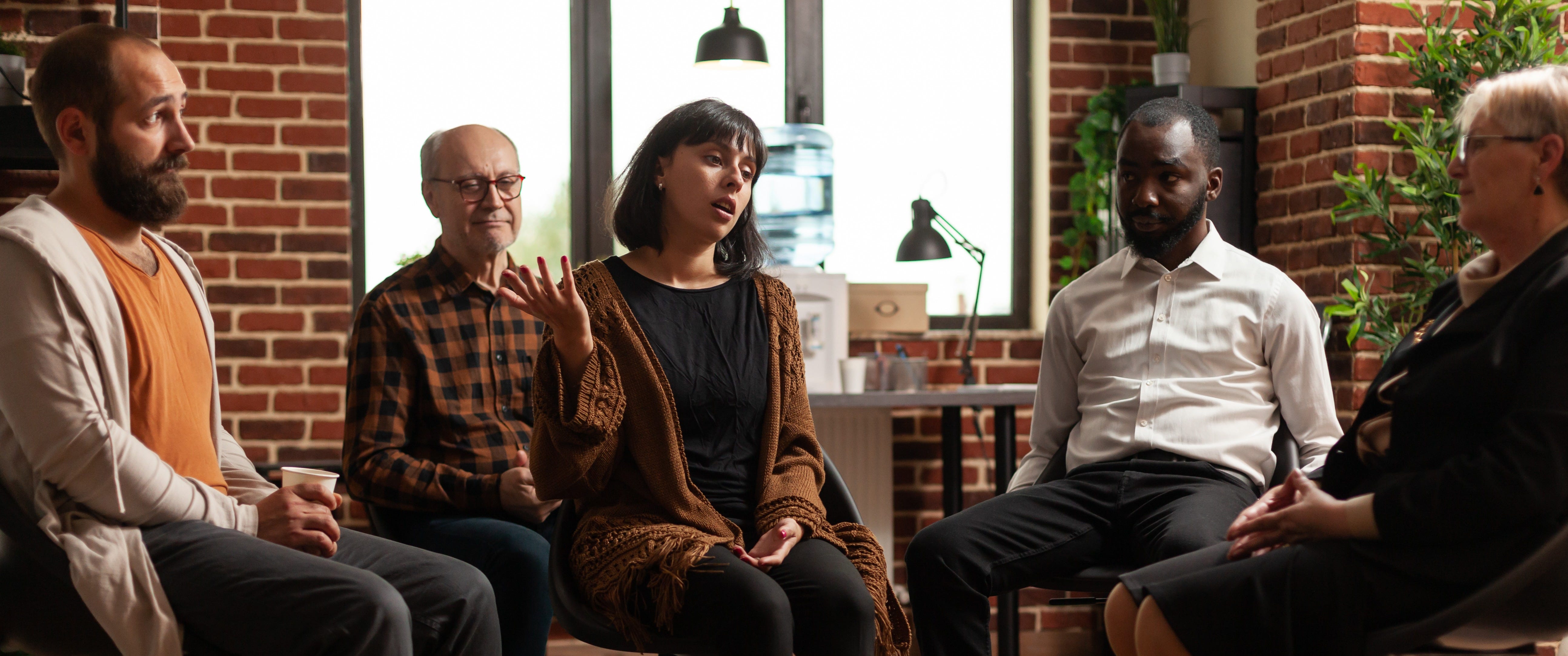
For decades, Alcoholics Anonymous (AA) and Narcotics Anonymous (NA)—those ubiquitous Twelve Step (TS) fellowships—have been fixtures in community halls and church basements, offering solace and structure to millions battling substance use disorders (SUD). But what happens when these informal gatherings intersect with formal treatment programs? A groundbreaking study titled “Patient characteristics associated with their level of twelve-step attendance before entry into treatment for substance use disorders,”* pulls back the curtain on a surprisingly underexplored question: How does prior attendance at AA or NA meetings shape the patients who walk through a clinic’s doors—and, more importantly, how can clinicians use this insight to tailor treatment?
The numbers alone tell a compelling story. Of the 3,125 patients admitted to this multimodal treatment hub last year, more than half—57.3%—had attended a TS meeting at some point before arrival. The other 42.6% had never set foot in one. These two groups, it turns out, are not created equal. Digging into the data, researchers uncovered patterns that could redefine how treatment providers approach care in 2025 and beyond.
A Tale of Two Cohorts
Picture the scene: A client sits across from a clinician, answering questions from the Global Appraisal of Individual Needs (GAIN), a semi-structured interview developed by Chestnut Health Systems, widely used to identify issues related to substance use, mental health, and other life areas. For the team behind this study, the GAIN was an essential tool in unlocking differences between TS veterans and newcomers. What they found was a mix of challenges and silver linings.
Those who’d attended TS meetings—whether once or a hundred times—carried heavier emotional burdens. Statistically, they scored significantly higher on measures of emotional problems, with a p-value less than .001 and an effect size that screams relevance (d = -0.58). They were also more likely to have attended formal treatment before (p < .001, d = 0.80), suggesting a longer, tougher road to recovery. But here’s the twist: These same patients showed signs of resilience forged in those community meetings. They were less likely to use substances in risky situations (p < .001, d = -0.55) and less reluctant to embrace abstinence (p < .001, d = -0.50). It’s as if the TS experience, however imperfect, had planted seeds of caution and commitment.
Then there’s the elite 11%—the self-described “regular” TS members. Compared to their peers, they reported lower recent substance use (p < .001, d = -0.80) and a greater likelihood of having attended an intensive outpatient program (p < .001, d = 0.46) or residential treatment (p < .001, d = 0.44). For them, TS wasn’t just a pit stop—it was a lifestyle.
Why It Matters Now
In an era where personalized medicine is the holy grail, these findings serve as a wake-up call for treatment providers. The feasibility of assessing TS attendance is no longer the issue; the real question now is how we use this data to meet clients where they are. For a treatment provider managing thousands of cases, knowing whether a client has TS experience could be the key to moving beyond a one-size-fits-all plan to a strategy that builds on their unique history.
Take the client with a TS history who is currently reporting a wide range of emotional struggles. A clinician might focus on incorporating mental health support, weaving that area of focus into their SUD treatment. For the regular attendee who’s already had periods of abstinence, the focus might shift to reinforcing and building upon those gains. It’s about differential treatment planning; one group might not yet be as motivated for behavioral change, another might be ready to build on what they’ve started.
The implications ripple beyond the walls of treatment providers. Businesses in the substance use treatment sector—already grappling with rising costs and staffing shortages—could see TS attendance as a low-cost variable with high-impact potential. If half your clients are walking in with some TS exposure, why not train staff to ask the right questions? Why not partner with local AA or NA groups to bridge the gap between community and care?
The Bigger Picture
This study isn’t just a snapshot—it’s a springboard. The researchers are already eyeing the next frontier: How does TS participation in community settings influence long-term outcomes? Are these differences a blip, or do they hold steady six months, a year, five years down the line?
For now, the message is clear: TS meetings are more than relics of a bygone era. They’re shaping the clients who show up at treatment centers—and the way those centers respond. In 2025, as AI-driven diagnostics and telehealth reshape healthcare, this old-school fellowship might also have implications for a smarter, more human approach to recovery. For clinicians, businesses, and clients alike, it’s a reminder that sometimes the most powerful tools are the ones already in the room.
*Galanter, M., White, W. L., Dennis, M. L., Hunter, B., Passetti, L., & Lustig, D. (2025). Patient characteristics associated with their level of twelve-step attendance prior to entry into treatment for substance use disorders. Addiction Science & Clinical Practice, 20(1), 16. https://doi.org/10.1186/s13722-025-00542-5

We completely redesigned the Chestnut and Lighthouse websites…check it out!
The Catalyst Podcast

Catalyst Poll

Chestnut Health Systems’ Lighthouse Institute is recruiting Emerging Adults (18-26 years old) facing challenges related to substance use, with their parents, for a paid research study seeking feedback for a new recovery program called Launch. Participating families will receive Launch services at no cost, be compensated for virtual research visits, and there is no waitlist! Call or Text Alice Dawson today (541-251-8507) or fill out the form on the Launch Website for more information.

We scour all four corners of the Internet to bring you the week’s most insightful, relevant, and actionable articles, studies, and reports.
The (artificial intelligence) therapist can see you now…This study, published in the New England Journal of Medicine, shows results from the first randomized clinical trial for AI therapy and suggests that given the right kind of training, AI bots can deliver mental health therapy with as much efficacy as — or, more than — human clinicians. Source: NPR
Associations between happiness with social factors and opioid agonist therapy among people who inject drugs ...This prospective cohort study aimed to examine self-reported happiness levels in patients with OUD/PWID, changes over time, and its associations with sociodemographic factors, opioid agonist therapy (OAT), and substance use. Source: Scientific Reports
Study finds Treating Patients for Opioid Use Disorder in the Hospital Leads to Better Outcomes After They Are Discharged…Offering hospitalized patients who are struggling with opioid use disorder medication to treat their addiction makes it more likely that they will continue with follow-up care after they are discharged. Source: Health Sciences News – UNM
Perceptions and experiences with police among people who use drugs in the initial year of British Columbia’s decriminalization of illegal drugs policy. National evaluation study conducted qualitative interviews with 100 PWUD who reported using drugs at least three times a week between 2023/2024. Findings underscore the need for improved police education and training, with an emphasis on promoting consistency and increased transparency, particularly in the use of discretion. Source: Research Gate
Patient-centered communication and its impact on minority health competence and outcomes in the United States. This study investigates the role of health competence as a potential mediator given its importance in navigating the health care system. Source: Scientific Reports
Quality Indicators in Community Mental Health Services: A Scoping Review…The findings highlight the importance of assessing and improving the quality of mental health services. A thorough evaluation requires a multilevel strategy that considers various indicators, including community, staff, patient, and structural factors. Source: Psychiatrist.com
Serotonin Signals the Brain’s Best Guess About Future Rewards…This new study reveals that serotonin neurons in the brain may play a crucial role in helping us estimate the value of future rewards. Source: Neuroscience News
Zero Suicide Model Implementation and Suicide Attempt Rates in Outpatient Mental Health Care… Study found that implementation of the Zero Suicide model was associated with a reduction in suicide attempt rates in 3 of 4 health systems, while the fourth system experienced a lower sustained rate. Source: JAMA Network
The Science of Forgiveness: How Letting Go Heals You…Research shows that forgiveness is deeply connected to well-being. When we hold on to grudges, our bodies respond by staying in a state of heightened stress. Source: Psychology Today
Study finds anxiety fuels emotional eating and weight gain…Researchers uncover how emotional eating and body dissatisfaction silently shape our weight and well-being, offering critical insight for better obesity and mental health strategies. Source: Medical Life Sciences
About Chestnut Health Systems’ Lighthouse Institute
Chestnut Health Systems’™ Lighthouse Institute was established in 1986. Our mission is to help practitioners improve the quality of their services through research, training, and publishing. Serving health and human service organizations through offices in Chicago and Bloomington/Normal, Illinois, and Eugene, Oregon, Lighthouse Institute staff conduct applied research, program evaluation, training, and consultation.
Lighthouse Institute publishes books, monographs, curricula, and manuals on various issues of behavioral health, education, and program management. Institute staff have backgrounds and expertise in addictions, business, education, management information systems, psychology, public health, rehabilitation, research methods, statistics, and social work. For more, visit https://www.chestnut.org/lighthouse-institute/