

Charting Modern Dentistry’s Expanding Role in Public Health
Ideas, insights, and innovation that advance public health and strengthen systems of care.

In the latest episode of “The Catalyst Podcast,” titled “Drilling Down on Oral Health,” three members of the Koehne family offered a multigenerational perspective on the evolution of modern dentistry and the often misunderstood and underappreciated relationship between oral and overall health.
Dr. Annie Koehne, a general dentist who has practiced for nearly three years at Chestnut Health Systems in Illinois, joined her mother, Dr. Diane Metrick, a veteran of more than 30 years in general dentistry and public health, and her father, Dr. Michael Koehne, who has spent 42 years in private practice. Together, they discussed the growing recognition of dentistry’s role as an integrated partner in primary care. They outlined real-world strategies such as mobile dental units, collaborative outreach programs, and Federally Qualified Health Centers that are closing gaps for underserved populations. They also touched on emerging technologies that were unimaginable a decade ago.
It was an insightful, wide-ranging conversation on critically important topics. Yet one theme stood out above all others: the importance of understanding how oral health is linked to chronic conditions such as diabetes, cardiovascular disease, and other systemic health challenges. Understanding those connections has become increasingly important for patients, providers, and policymakers alike. The following article takes a deeper dive into the science, implications, and evolving role of oral health as an essential component of whole-person care.
Public awareness of these connections remains limited.
For many Americans, oral health remains largely disconnected from their understanding of overall health. Teeth and gums are often viewed as a separate concern—important for preventing cavities, or avoiding discomfort, but not as a factor in managing chronic disease. Historically, dentistry and medicine evolved as separate disciplines, with different education systems, reimbursement structures, and care settings. As a result, many patients still do not realize that oral disease can both influence and be influenced by systemic health conditions, as underscored by a 2025 Delta Dental survey of American adults that showed that few grasp the specific ties to heart disease, diabetes, and high blood pressure.
The Bidirectional Link Between Oral Health and Chronic Disease
What researchers now understand is that the relationship is often bidirectional. Chronic diseases can increase the risk of oral health problems, while oral infections and inflammation can worsen the progression or management of chronic diseases. The common denominator is frequently inflammation. The mouth contains hundreds of species of bacteria, and when oral disease such as periodontitis develops, those bacteria and inflammatory responses can extend beyond the oral cavity and affect the entire body.
Periodontal disease is especially important in this regard. According to the Centers for Disease Control and Prevention (CDC), approximately 42 percent of U.S. adults age 30 and older have some form of periodontitis, making it one of the most common chronic inflammatory diseases in the country. Among adults with diabetes, the prevalence rises to roughly 60 percent.¹
Diabetes: The Strongest Two-Way Relationship
Perhaps no connection is better established than the one between diabetes and periodontal disease. People with diabetes are more susceptible to gum infections because elevated blood sugar levels can impair immune function and increase inflammation. At the same time, untreated periodontal disease can make it more difficult to control blood glucose levels.
The CDC notes that poor periodontal health can worsen glycemic control in people living with diabetes.² Inflammation associated with gum disease can increase insulin resistance, making blood sugar management more challenging. Research has shown that treating periodontal disease can lead to improvements in blood sugar control, reinforcing the idea that oral health should be considered part of comprehensive diabetes management.
The burden is substantial. Adults with diabetes are 40 percent more likely to have untreated tooth decay than adults without diabetes, and adults age 50 and older with diabetes experience significantly higher rates of tooth loss.³
Cardiovascular Disease
The relationship between oral health and cardiovascular disease continues to be an active area of research. While scientists are still working to fully understand the mechanisms involved, evidence consistently shows an association between periodontal disease and increased risk of heart disease and stroke.
One leading theory centers on chronic inflammation. The same inflammatory processes that damage gum tissue may contribute to atherosclerosis—the buildup of plaque within arteries. Researchers have also found that oral bacteria can enter the bloodstream through inflamed gum tissue, potentially contributing to vascular inflammation and cardiovascular complications.
Although periodontal disease is not considered a direct cause of heart disease, the association is strong enough that many healthcare organizations now recognize oral health as an important component of cardiovascular risk assessment and prevention.
Respiratory Disease
Poor oral health can also affect the respiratory system. Harmful bacteria in the mouth may be inhaled into the lungs, particularly among older adults and individuals with compromised immune systems. This can increase the risk of respiratory infections, including pneumonia.
For patients in long-term care facilities, hospitals, and nursing homes, maintaining good oral hygiene has become an increasingly important component of infection prevention strategies. Studies have shown that improved oral care protocols can reduce the incidence of respiratory infections among vulnerable populations.
Pregnancy Outcomes
Oral health plays a significant role during pregnancy as well. Hormonal changes can increase susceptibility to gingivitis and other periodontal conditions. Researchers have identified associations between severe periodontal disease and adverse pregnancy outcomes, including preterm birth and low birth weight.
While research continues to explore the exact nature of these relationships, healthcare providers increasingly encourage pregnant women to maintain regular dental visits as part of routine prenatal care.
Cognitive Health and Other Emerging Areas
Researchers are also investigating potential links between oral health and neurodegenerative diseases such as Alzheimer’s disease and other forms of dementia. Although these connections are not yet fully understood, chronic inflammation and the presence of oral bacteria in other parts of the body have generated significant scientific interest.
Additional studies have explored associations between periodontal disease and conditions such as rheumatoid arthritis, chronic kidney disease, and certain autoimmune disorders. In many cases, inflammation appears to be the common biological pathway connecting oral and systemic disease.
Closing the Access Gap
Despite growing recognition of oral health’s importance, access to care remains uneven. Low-income, rural, minority, and uninsured Americans continue to experience higher rates of untreated tooth decay, gum disease, and tooth loss, often because of barriers such as cost, provider shortages, transportation challenges, and limited insurance coverage.
Addressing these disparities requires bringing care to patients rather than expecting patients to overcome those barriers on their own. Federally Qualified Health Centers (FQHCs) have become a vital part of that solution by integrating dental and medical services under one roof, often on a sliding-fee scale. Providers at centers such as Chestnut Health Systems regularly treat patients who might otherwise delay care until a dental problem becomes a medical emergency.
Other innovative approaches are helping expand access as well. Mobile dental clinics serve schools, nursing homes, and rural communities, while portable equipment allows providers to deliver care in community settings and workplaces. At the same time, expanded roles for dental hygienists and dental therapists are increasing the availability of preventive services, particularly in underserved areas. Combined with collaborative outreach efforts involving dentists, physicians, and public health professionals, these models are helping shift oral healthcare from a reactive system focused on treatment to a proactive one focused on prevention.
A Shift Toward Integrated Care
As evidence continues to accumulate, healthcare leaders are increasingly advocating for greater integration between medical and dental care. Rather than treating oral health as a separate specialty, many experts now view it as an essential component of whole-person health.
This shift has important implications for prevention. Regular dental examinations can identify signs of systemic disease, while medical providers are becoming more aware of the role oral health plays in managing chronic conditions. The emerging consensus is clear: protecting oral health is an investment in overall health and long-term well-being. It is a public health imperative with implications for reducing healthcare costs, improving chronic disease management, and advancing overall population health.
Sources
CDC, “About Periodontal (Gum) Disease” (2024): About 4 in 10 U.S. adults age 30+ have periodontitis; prevalence approaches 60% among adults with diabetes. (CDC)
CDC, “About Oral Health” (2024): Poor periodontal health can worsen glycemic control in people with diabetes. (CDC)
CDC, “Diabetes and Oral Health Facts” (2024): Adults with diabetes are 40% more likely to have untreated cavities and experience significantly higher rates of tooth loss. (CDC)
Catalyst Poll
Drilling Down on Oral Health: Making Dentistry More Accessible and the Connection Between Oral and Overall Health
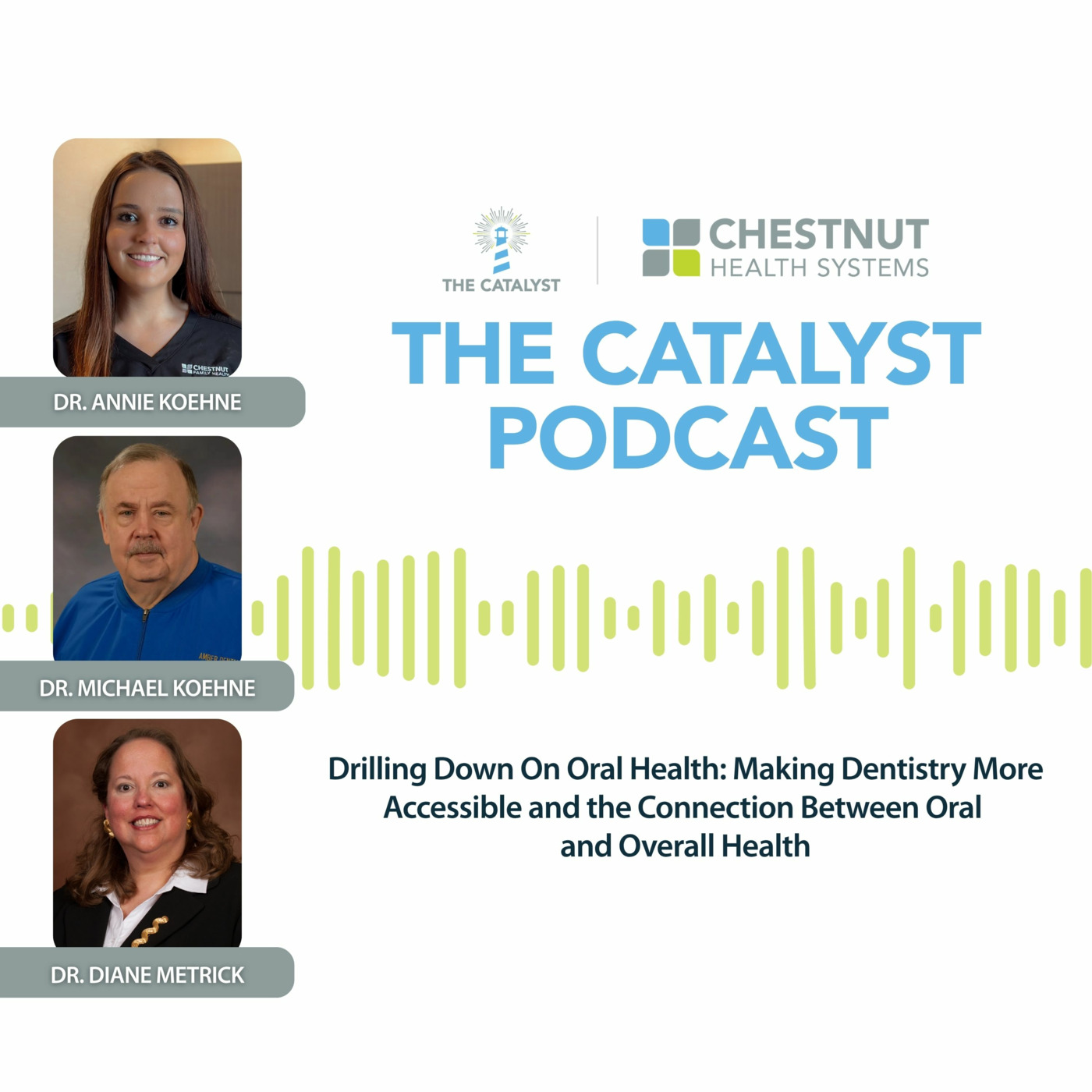
With respect to the great Sly Stone, this episode of the Catalyst is a family affair. We spoke with three members of the Koehne family, all practicing dentists: Dr. Annie Koehne, who has been practicing at Chestnut Health Systems for just under three years, her mom, Dr. Diane Metrick, who has over 30 years of experience in general dentistry and public h…

Free, Online Toolkit for Partnering with Communities in Substance Use Research. Chestnut Health Systems has released the final chapters of its free, online Community-Based Participatory Research (CBPR) toolkit, created to help researchers build meaningful partnerships through Community Boards of people with lived experience with substance use. This resource is informed by years of collaboration with individuals from the HEAL Connections Lived Experience Panel, the JEAP Initiative Community Boards, the CHEARR Community Boards, and the PATH Community Board.

We scour all four corners of the Internet to bring you the week’s most insightful, relevant, and actionable articles, studies, and reports.
New research shows global mental health cases have doubled since 1990.
New study reports that around 1.2 billion people worldwide are affected by mental health issues, with cases doubling since 1990. Source: DailyMotion NewsStudy finds health care provider stigma toward substance use disorder varies sharply by condition and provider. First national analysis from Columbia University and collaborators finds stigma among U.S. health care providers toward patients with substance use disorders varies significantly by substance type (opioid, stimulant, alcohol) and is often higher than toward other chronic conditions like depression or diabetes. Source: MedicalXpress
1 in 4 U.S. Adults Don’t Recognize Addiction as a Health Condition. New nationally representative Addiction Policy Forum and Gallup study finds that nearly 1 in 4 U.S. adults do not view addiction as a health condition, reducing belief in treatability, early intervention, and medication effectiveness for substance use disorders. Source: Addiction Policy Forum
Physical & Behavioral Health Integration Resources. American Hospital Association resources emphasize integrating behavioral and physical health services in primary care settings to improve patient outcomes and support whole-person care. Source: American Hospital Association
New Study Highlights the Need for Improved Behavioral Health. Lancet Psychiatry study projects that 50% of American adults will be diagnosed with at least one mental health disorder by age 75, underscoring the urgent need for better behavioral health care systems. Source: Horizon Health
National Council for Mental Wellbeing Presents a New Study: Behavioral Health Workforce Shortage Will Negatively Impact Society. New study from the National Council for Mental Wellbeing examines the behavioral health workforce shortage and its broader negative societal impacts. Source: National Council for Mental Wellbeing
New Report Shows Remarkable Lack Of Access To Mental Health Care. New report details the significant lack of access to mental health and behavioral health services, calling for expanded integrated care to address gaps in treatment. Source: NAMI Glac
New Survey Finds Widespread Mental and Behavioral Health Challenges Among Young Adults and College Students. UnitedHealthcare’s fourth annual national survey (conducted by YouGov) of over 2,000 young adults and college students (ages 18–28) reveals widespread mental and behavioral health challenges, including how parents perceive and respond to these issues and the need for greater mental health support. Source: UnitedHealth Group
Just one week off social media can improve young adults’ mental health, study finds. New study shows that limiting social media use for just one week significantly reduces symptoms of anxiety and depression in young adults.
Source: NPRStudy finds digital therapy app improves student mental health. Population-based study of more than 6,200 university students finds a smartphone app with text coaching increases access to care and reduces symptoms of depression, anxiety, and eating disorders. Source: Washington University in St. Louis
Mental Health and Substance Use Linked in New Survey. New survey highlights the strong link between mental health conditions and substance use, underscoring the frequent co-occurrence of behavioral health issues. Source: JAMA
Kids who need treatment for opioid use disorder rarely get it. Nationwide study published in Health Affairs finds fewer than 1 in 3 adolescents (ages 12–17) with opioid use disorder receive critical medications or age-appropriate care.
Source: Prison Policy InitiativeNearly 1 in 5 U.S. Adolescents and Young Adults Use AI Chatbots for Mental Health Advice. RAND survey shows AI chatbot use for mental health support among ages 12–21 rose over 40% in one year to 19.2%, comparable to rates of professional counseling. Source: RAND Corporation
Reclaiming informed consent to train mental health AI with patient data
Study examines how AI companies train models on therapy transcripts using opaque terms of service, calling for stronger informed consent to protect patient data in mental health AI development. Source: npj Digital Medicine
About Chestnut Health Systems
Chestnut Health Systems™ is a nonprofit organization dedicated to improving public health through a comprehensive approach that includes direct service delivery, prevention, research, training, and system improvement. For decades, Chestnut has worked to bridge the gap between knowledge and practice—helping individuals thrive, strengthening organizations, and supporting healthier communities.
The Chestnut corporate office is in central Illinois, with clinical locations in Belleville, Bloomington, Granite City, and Maryville, IL and De Soto and Hillsboro, MO; prevention and recovery services are offered in dozens of counties in Illinois; and Lighthouse Institute research offices are located in Chicago and Bloomington, IL, Euguene, OR, and remote researchers across the United States.